Pro packing methods to protect fragile items during rubbish removal
Fragile items have a habit of turning a simple rubbish removal into a nervous little drama. One wobble, one careless lift, and suddenly you are dealing with broken glass, chipped ceramics, cracked mirrors, or a box of "I thought that was padded enough" regrets. The good news? With the right packing approach, you can dramatically reduce the risk. This guide to Pro packing methods to protect fragile items during rubbish removal walks you through the practical steps that actually work, from choosing the right materials to loading items so they survive the journey intact.
Whether you are clearing a loft, emptying a flat, or dealing with a full household load, the same basic principle applies: fragile items need structure, cushioning, and careful handling. That sounds obvious, but in real life it is easy to underestimate how much movement happens during a clearance. Boxes shift. Bags tip. Someone bumps a stack with a shoulder. It happens fast, usually with a horrible little clink. Let's make that less likely.
Table of Contents
- Why pro packing methods matter
- How the packing process works
- Key benefits and practical advantages
- Who needs this and when it makes sense
- Step-by-step guidance
- Expert tips for better results
- Common mistakes to avoid
- Tools, resources and recommendations
- Law, compliance and best practice
- Options and comparison table
- Case study or real-world example
- Practical checklist
- Conclusion
- Frequently asked questions
Why Pro packing methods to protect fragile items during rubbish removal Matters
Fragile items are vulnerable for two reasons: they are usually valuable, and they are often awkward. A vase is light but unstable. A plate stack may look compact but can crack under pressure. A framed picture can survive a lot, until the wrong corner catches a hard edge. During rubbish removal, these items are exposed to repeated movement, vibration, and contact with heavier waste. In other words, the journey is often more dangerous than the item's final destination.
People sometimes assume that because something is being removed, it no longer needs much care. Truth be told, that is exactly the moment care matters most. If you are trying to separate reusable or sentimental items from actual rubbish, good packing helps you avoid accidental damage and keeps sorting much easier when the load is being moved out. It also reduces the chance of injury from shattered glass or sharp ceramic edges.
There is another reason this matters. Good packing helps the whole clearance run more smoothly. Crews can stack, carry, and load more confidently when fragile boxes are clearly labelled and properly sealed. That saves time, lowers stress, and keeps everyone from doing the awkward "please don't touch that one" shuffle in a narrow hallway.
How Pro packing methods to protect fragile items during rubbish removal Works
The process is not complicated, but it is deliberate. You are creating layers of protection so that weight, movement, and impact are absorbed before they reach the fragile item itself. Think of it as building a small buffer zone around anything breakable.
At a practical level, pro packing relies on four things:
- Separation - keeping breakables away from heavy, sharp, or irregular items.
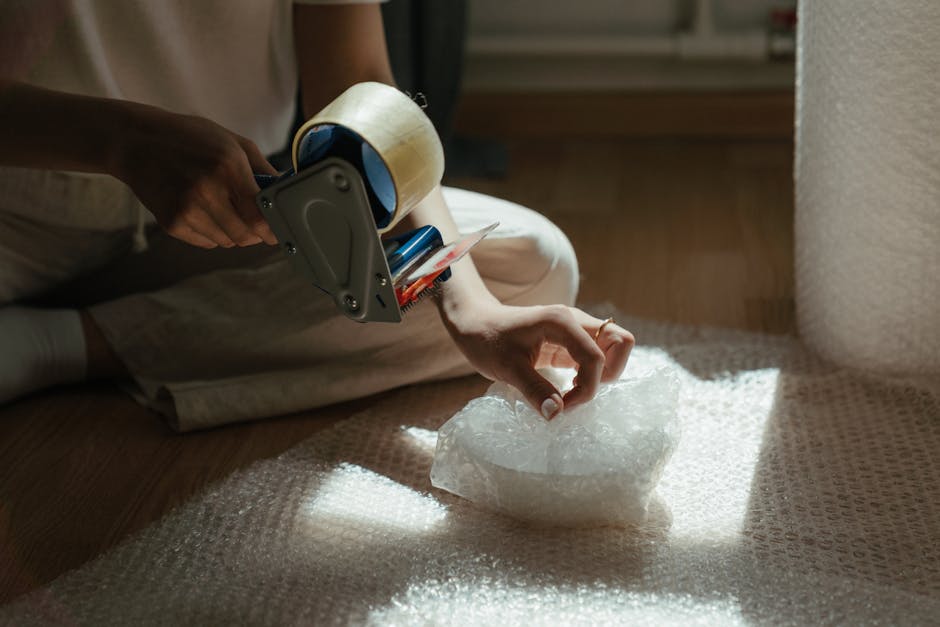
- Cushioning - using paper, bubble wrap, towels, or soft filler to absorb knocks.
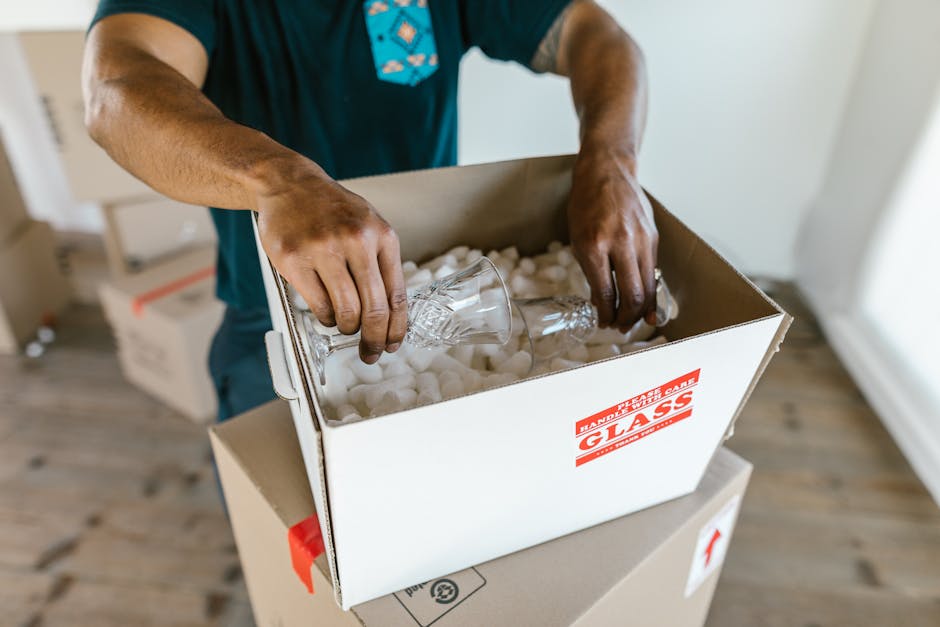
- Containment - using sturdy boxes, dividers, and secure tape so items do not shift around.
- Labelling - marking boxes clearly so they are handled with care and placed in the right order.
A well-packed box should feel snug but not crushed. If it rattles, it is too loose. If it bulges, it is too full. That middle ground is where the magic happens. You want the contents held firmly, with enough padding to soften bumps but not so much pressure that the items rub against each other.
In a proper rubbish removal setting, this approach is especially useful when fragile goods are being moved alongside mixed waste, old furniture, or bulky items. If your clearance includes larger pieces, services such as general waste removal or furniture clearance often involve tight loading spaces, so good packing gives you a real edge. It is a small investment in time that can prevent a very annoying mess later.
Key Benefits and Practical Advantages
There is more to good packing than simply avoiding broken cups. You also make the whole clearance process cleaner, calmer, and more efficient. Here are the benefits that matter in real life.
- Less breakage - the obvious one, but worth saying plainly.
- Safer handling - fewer cuts, fewer sharp edges, fewer surprises.
- Better sorting - it is easier to distinguish reusable items from waste.
- Faster loading - clearly packed items are easier to stack and move.
- Lower stress - when you know fragile things are secure, the job feels more manageable.
- Better space use - properly packed boxes fill awkward gaps more neatly than loose items.
There is also a financial angle, although it is not always obvious. If something breaks during a move, you may lose the chance to reuse or resell it. For sentimental items, of course, the cost is emotional rather than monetary. Either way, you notice it. Nobody wants to open a box later and find the contents have taken a rougher route than expected.
Expert summary: the best packing method is rarely the fanciest one. It is the one that keeps items still, separates pressure points, and makes handling obvious to everyone involved.
Who This Is For and When It Makes Sense
This approach is useful for almost anyone planning a clearance, but it matters most if your load includes items with glass, glaze, screens, mirrors, ceramics, or delicate finishes. It also makes sense when access is awkward. Stairs, narrow landings, shared entrances, and loft hatches all increase the chance of knocks.
You will find it especially helpful if you are:
- clearing a house after a long-term tenancy or family move
- emptying a loft where boxes have been stored for years
- removing old kitchenware, ornaments, or glass shelving
- sorting a garage with mixed tools, containers, and fragile household items
- disposing of office display items, monitors, or framed materials
- handling furniture with glass elements such as tabletops or cabinet doors
For larger clearances, a little planning goes a long way. If you are dealing with a full property, the needs may overlap with house clearance, home clearance, or even flat clearance. The tighter the space and the more mixed the contents, the more useful a structured packing plan becomes.
And if this all sounds like overkill for a few plates and mugs, fair enough. But a couple of cracked boxes can turn a simple job into a much messier one. Better to spend ten extra minutes now than deal with shards and regrets later.
Step-by-Step Guidance
Below is a practical method you can use for fragile items before rubbish removal begins. It is simple, but it works.
1. Sort items before you pack
Do not throw everything into boxes and hope for the best. Separate fragile items into groups: glass, ceramics, framed items, electronics, and sentimental keepsakes. This lets you choose the right padding and box size for each group.
2. Prepare a clean packing area
Use a table, floor space, or a cleared corner. Keep tape, markers, scissors, wrapping material, and boxes together so you are not constantly wandering off to hunt for supplies. It sounds minor. It really helps.
3. Wrap each item individually
Use paper or soft wrap around each item before it goes into a box. For glassware or ornaments, wrap the most fragile points first - handles, rims, corners, and bases. A single wrap is not always enough; two lighter layers are often better than one tight one.
4. Use the right box size
Choose a box that fits the item comfortably. A box that is too big invites movement. A box that is too small puts pressure on edges. Medium-sized boxes are usually safer for fragile contents than giant ones that become too heavy to lift safely.
5. Add cushioning underneath and around the sides
Line the base with scrunched paper, bubble wrap, towel material, or other soft padding. Then add cushioning around all sides so the item sits in the middle rather than against the cardboard walls. If there is a gap, fill it.
6. Pack heavier fragile items at the bottom
If you are packing several breakables in one box, place the slightly heavier ones lower down, with lighter or more delicate items above. Keep weight evenly spread so the box does not tip awkwardly when lifted.
7. Separate layers with padding
For stacked plates, picture frames, or similar items, place cushioning between each layer. This reduces pressure points and stops edges from rubbing together during movement.
8. Seal, label, and check the box
Seal boxes firmly with tape and mark them clearly as fragile. A short note like "glassware" or "mirror" is more useful than a vague label. Before closing the lid, give the box a gentle shake. If you hear movement, add more packing.
9. Keep fragile boxes separate during loading
Do not bury fragile boxes under heavy rubbish bags or loose bulky items. Place them where they can be carried last or loaded into a stable section of the vehicle. If you are working with a team, say so early and clearly.
10. Unpack or unload with the same care
Packing only solves half the problem. When the clearance is done, handle the boxes carefully until they are unloaded or opened. A rushed final lift is where people often undo all the good work. Bit annoying, really.
Expert Tips for Better Results
These are the small details that separate decent packing from proper pro-level packing.
- Choose small boxes for dense fragile items. Overloaded boxes are one of the biggest causes of damage.
- Use original packaging where possible. Manufacturer packaging is often better shaped than generic cardboard.
- Protect corners aggressively. Corners are usually the first point of impact on mirrors, frames, and screens.
- Never mix glass with metal or rubble. That one is asking for trouble.
- Mark boxes on multiple sides. A label on the top alone is easy to miss when boxes are stacked.
- Keep valuable or sentimental items separate from disposal streams. If you are unsure, set them aside before the clearance begins.
- Use towels and blankets for larger breakables. Soft furnishings are surprisingly handy when you need quick padding.
A useful rule of thumb: if a box feels effortless to lift, that is usually a good sign. If it feels like you have packed half a bookshelf into it, reconsider. Your back will thank you, and so will the contents.
Also, think about weather and timing. If the clearance is happening on a damp morning, cardboard can soften faster than you expect. A dry inner layer or a plastic protective liner can help keep boxes stable for longer, especially if items are waiting outside for collection.
Common Mistakes to Avoid
Most damage happens because of simple, avoidable errors. The good news is that once you know them, they are easy to dodge.
- Using thin supermarket boxes - they collapse or split under pressure.
- Leaving empty space inside boxes - movement leads to impact.
- Overtaping or undersealing - too little tape lets boxes open; too much can tear weak cardboard.
- Packing heavy and fragile items together - mixed loads are a common cause of breakage.
- Failing to label clearly - fragile items end up handled like general waste.
- Stacking delicate items vertically without support - especially risky with frames and plates.
- Rushing the final sort - this is the classic "we'll be fine" mistake. Often, not fine.
One especially common issue is assuming that clothing or paper alone will protect everything. Soft stuffing helps, but it does not replace a proper structure. A vase wrapped in a towel and tossed in a half-full box is still a vase in a half-full box. It needs side support too.
Tools, Resources and Recommendations
You do not need specialist equipment to protect fragile items during rubbish removal, but a few good basics make a big difference.
| Item | Best use | Why it helps |
|---|---|---|
| Strong cardboard boxes | General fragile packing | Gives structure and resists crushing |
| Packing paper | Wrapping glass, ceramics, small ornaments | Flexible and easy to shape around odd items |
| Bubble wrap | High-risk breakables, corners, framed pieces | Excellent cushioning for impact control |
| Heavy-duty tape | Sealing box seams and reinforcing bases | Prevents accidental opening during handling |
| Marker pen | Labelling sides and tops of boxes | Makes careful handling much more likely |
| Blankets or towels | Large awkward items | Adds fast, soft protection for bulky pieces |
If your clearance is part of a larger property emptying, it can also help to think beyond packaging and consider the overall removal plan. For example, customers dealing with bulky mixed items often combine fragile packing with garage clearance or loft clearance so that awkward storage items and breakables are sorted in one go rather than in bits and pieces.
For sustainability-minded readers, the wrapping material matters too. Reusable blankets, paper wrap, and clean cardboard are often easier to recycle or reuse than excessive plastic. If you are trying to reduce waste as you clear waste, which is a bit of a lovely contradiction, choose materials with a second life where you can.
Law, Compliance, Standards, or Best Practice
When fragile items are being removed as part of a broader rubbish clearance, the practical focus is usually on safety and responsible handling rather than complex paperwork. Still, there are a few common-sense best practices worth keeping in mind.
First, sharp breakages should be contained securely. Broken glass, chipped ceramics, and cracked mirrors should be wrapped, boxed, and labelled clearly so they are not loose in a vehicle or waste container. That reduces the risk of injury to anyone handling the load.
Second, if an item may still be reusable, it is sensible to separate it from general rubbish. That is particularly important with furniture and household goods. Services such as furniture disposal and recycling and sustainability reflect the broader principle: keep reusable, recyclable, and waste items as clearly separated as possible.
Third, if you are working in a shared property or business premises, good packing and clear labelling help support safer handling in corridors, stairs, and communal areas. That is especially relevant for office clearance and commercial collections where the pace can be brisk and the foot traffic constant.
If you are using a waste carrier or clearance provider, it is sensible to check that they have appropriate safety processes, insurance expectations, and handling standards in place. You do not need to overcomplicate it. Just ask the straightforward questions. A reputable provider should not mind.
Options, Methods, or Comparison Table
Not every fragile item needs the same level of packing. Here is a practical comparison that helps you decide how much protection to use.
| Method | Best for | Pros | Watch out for |
|---|---|---|---|
| Simple paper wrap | Light ornaments, mugs, small decor | Quick, cheap, easy to recycle | Not enough for sharp knocks or heavy stacking |
| Bubble wrap plus box | Glassware, frames, ceramics | Good impact protection and spacing | Can add bulk, so packing needs to stay organised |
| Layered box with dividers | Multiple similar fragile items | Excellent separation and stability | Takes more time to prepare |
| Blanket wrap for large items | Mirrors, table tops, cabinet glass | Useful for awkward shapes and quick protection | Needs securing so it does not slip |
| Original packaging | Electronics, appliances, boxed decor | Usually the best fit and strongest structure | Often not available after years in storage |
For most people, a mixed approach is best. Use paper for lighter items, bubble wrap for the things that really matter, and a strong box with filler for anything likely to shift. It is not glamorous. It just works.
Case Study or Real-World Example
Here is a realistic example from a typical household clearance scenario. A family was clearing a spare room that had turned into a holding pen for everything from framed prints to old crockery and a couple of glass lamps. Nothing wildly expensive, but a fair amount of sentimental value. The room also had tight access - one narrow doorway, one awkward stair turn, and a very small landing.
Instead of loading the fragile items loose, they sorted them first into categories. Frames were wrapped individually with cardboard corner protection. Crockery went into smaller boxes with paper padding between layers. The lamps were boxed separately with soft filler around the bases and shades removed to prevent crushing. Each box was marked clearly and loaded on top of heavier non-fragile waste.
The outcome was simple: no breakage, less confusion during loading, and a much calmer clear-out. The real benefit was not just protection. It was confidence. Once the fragile things were under control, the rest of the rubbish removal felt manageable rather than chaotic. That emotional shift is easy to underestimate, but very real.
It is a small thing, in the end. But small things are what save the day.
Practical Checklist
Use this checklist before collection day. If you can tick most of these off, you are in good shape.
- Fragile items have been separated from general waste
- Suitable boxes have been chosen for weight and shape
- Each item has been wrapped individually where needed
- Empty spaces inside boxes have been filled
- Heavy fragile items are not overpacked into one box
- Breakables are not mixed with sharp metal or rubble
- Boxes are sealed securely with tape
- Fragile labels are visible on more than one side
- Any reusable items have been kept apart from rubbish
- Loading order has been planned so fragile boxes stay on top or in a safe section
Quick rule: if you can hear movement when you lift a box, it still needs more padding.
Conclusion
Protecting fragile items during rubbish removal is not about fancy packing tricks. It is about giving each item enough structure, padding, and clear handling so it can survive the move without drama. The best results usually come from simple habits done properly: separate items, wrap them well, fill the gaps, label clearly, and load with care.
That approach saves time, reduces breakage, and makes the whole clearance feel far less stressful. If you are handling a busy household emptying, a loft tidy-up, or a mixed rubbish removal job, good packing is one of those little decisions that pays for itself immediately. And honestly, it is a relief to know the boxes are secure before the lifting starts.
If you are planning a clearance and want a smooth, careful process from start to finish, it helps to work with a team that understands both safety and practical handling.
Get a free quote today and see how much you can save.
And if all you do after reading this is pack the next box a bit more carefully, that is already a win. Sometimes that is all it takes.
Frequently Asked Questions
What is the best way to protect fragile items during rubbish removal?
The best method is to wrap each fragile item individually, place it in a sturdy box, fill empty spaces with cushioning, and label the box clearly. The goal is to stop movement first, then absorb any bumps that happen during lifting or loading.
Should I use bubble wrap or paper for breakables?
Both can work, but they serve slightly different purposes. Paper is great for wrapping lighter items and filling gaps. Bubble wrap gives better impact protection for glass, frames, and ceramics. In practice, a mix of both is often the safest approach.
Can I put fragile items in bin bags?
It is usually a bad idea for anything truly breakable. Bin bags do not stop crushing or shifting, and sharp edges can tear them easily. If the item is fragile, use a box or rigid container instead.
How do I pack plates and glassware without them breaking?
Wrap each piece separately, stand plates on edge where possible, and use padding between layers. Glassware should be cushioned around the rim, base, and sides so it cannot rattle inside the box.
What size boxes are safest for fragile rubbish removal?
Smaller to medium boxes are usually safest because they are easier to lift and less likely to be overloaded. Large boxes may seem convenient, but they often become too heavy and allow items to shift around more.
Do I need to label fragile boxes if they are going straight to disposal?
Yes, it is still worth labelling them. Clear labels help everyone handle the boxes properly and reduce the chance of breakage, cuts, or confusion during loading and sorting.
How should mirrors or framed glass be packed?
Use corner protection, wrap the surface carefully, and secure the item so it cannot flex. For larger mirrors or frames, blanket wrapping can help, but the item should still be supported in a rigid position during transport.
What should I do with broken glass before collection?
Broken glass should be wrapped securely, placed in a strong box or rigid container, and clearly marked so it is handled carefully. Never leave loose shards exposed in a mixed waste pile.
Is it worth separating reusable items from rubbish?
Definitely. If something can be reused, donated, or recycled, separating it before removal makes the process cleaner and more responsible. It also helps reduce avoidable waste, which is always a good thing.
Can professional clearers help with packing fragile items?
Yes, many clearance jobs benefit from advice or hands-on help with packing, especially if the property contains mixed waste, breakables, or awkward access. It is worth discussing the fragile items before collection day so the team knows what needs extra care.
How far in advance should I pack fragile items before rubbish removal?
Ideally, pack them the day before or earlier if you can. That gives you time to check for loose items, add more padding if needed, and avoid rushing. Rushing is where breakages happen, simple as that.
What if I only have a few fragile items?
Even a few items deserve proper protection. A single cracked plate or smashed frame can create mess and risk, so use a small strong box with enough padding to hold everything still. The method stays the same, just on a smaller scale.
Does good packing make rubbish removal faster?
Usually, yes. Well-packed fragile items are easier to carry, stack, and place safely in the vehicle. That means less hesitation, fewer repacks, and a smoother overall clearance. Not glamorous, but very useful.